
Is your Thermomix, the shining star of your kitchen benchtop, slowly becoming an expensive (but very effective) paperweight? You're not alone. Many Aussie home cooks get their brilliant new machine home, make a few stellar soups or a perfect risotto, and then… fall back into old habits. The sheer potential of the TM7, from kneading dough to multi-level Varoma cooking, can feel a little overwhelming.
This is where a Thermomix cooking class comes in. It's the single best way to bridge the gap between owning this incredible appliance and truly mastering it. A great class isn't just about following a recipe; it's about learning the techniques, hacks, and rhythms that transform your machine from a gadget into a genuine kitchen partner. It's about building the confidence to go off-recipe and turn everyday ingredients into something spectacular.
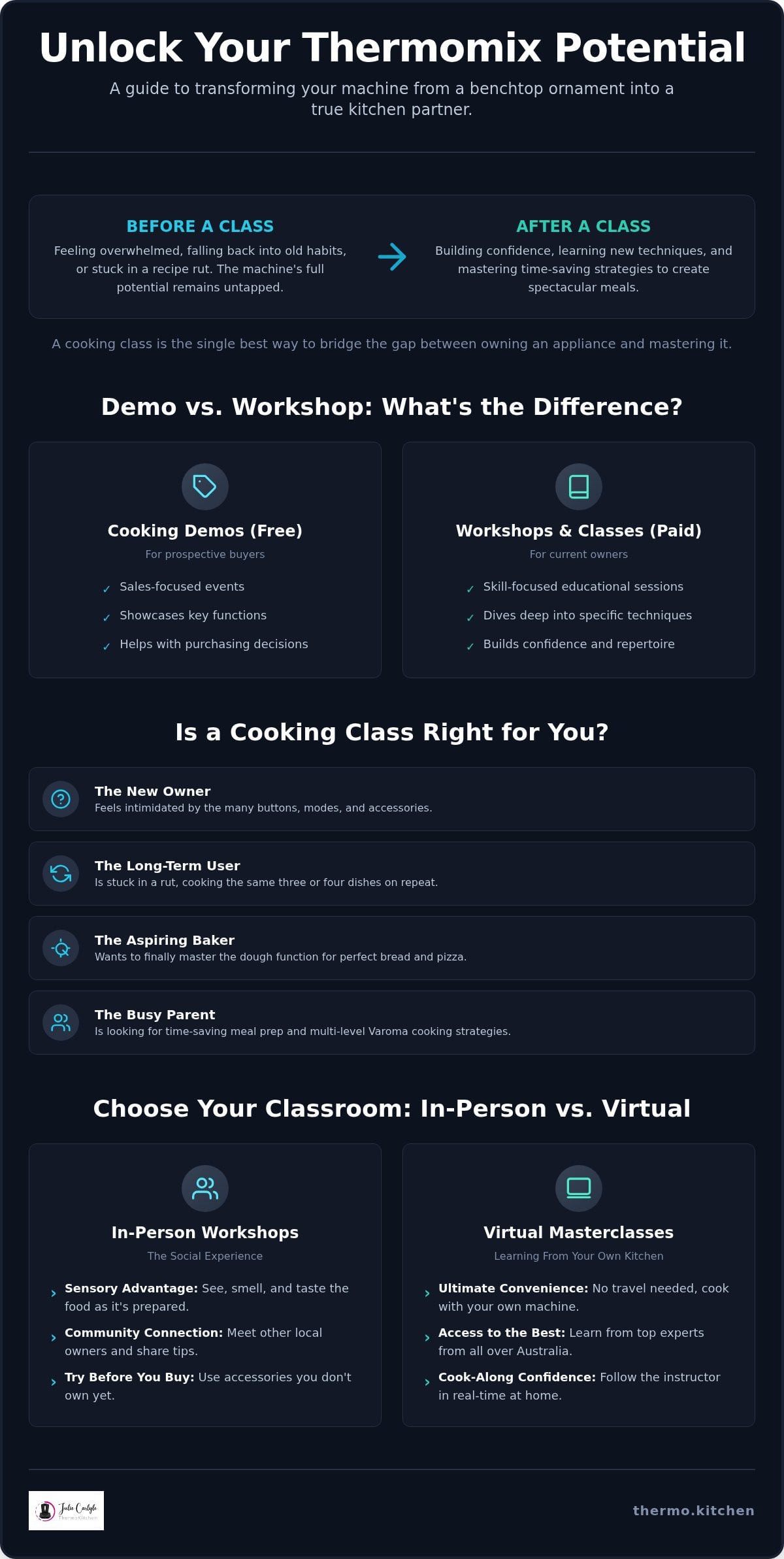
Discover how a Thermomix cooking class can transform your kitchen routine from a daily chore into a culinary adventure.
What Exactly is a Thermomix Cooking Class?
Think of it as a guided tour of your machine's most powerful features, led by an expert who has seen and solved every common kitchen challenge. A Thermomix cooking class is a structured, hands-on or virtual workshop designed to teach you specific skills that go far beyond the basic "Guided Cooking" steps on your screen. It's where you learn the why behind the what, unlocking the full potential of your investment.
Unlike passively watching a video, a class provides a dynamic learning environment. It's an opportunity to ask questions in real-time, understand tricky steps like emulsifying a sauce, and learn the subtle audio and visual cues your machine gives you. For many, it's the lightbulb moment where theory clicks into practice, and confidence soars.
In a nutshell, a Thermomix cooking class is a hands-on or virtual workshop that bridges the gap between owning an appliance and mastering its full potential.
The Distinction Between Demos and Workshops
It's crucial to understand the difference between a free "Cooking Demo" and a paid "Cooking Class" or "Workshop."
- Demos are fantastic for those considering buying a TM7. They are sales-focused events designed to showcase the machine's key functions and incredible results. You'll see it in action and taste the delicious food, but the primary goal is to help you with your purchasing decision.
- Workshops and Classes are skill-focused educational sessions for people who already own a machine. They dive deep into specific areas, like sourdough bread making, high-heat cooking for curries, or mastering multi-level Varoma meals. The goal here is to build your confidence and expand your culinary repertoire.
- Specialised Experiences often go a step further, offering an immersive way to explore new flavours, such as Mediterranean or Asian cuisines, all adapted for the thermo-cooker.
Who Should Attend a Class?
Whether you're a complete novice or a seasoned user, there's a class that can elevate your skills. You'll get the most value if you are:
- A new owner who feels a bit intimidated by all the buttons, modes, and accessories.
- A long-term user stuck in a recipe rut, cooking the same three or four dishes on repeat.
- An aspiring baker who wants to finally master the dough function for perfect bread, scrolls, and pizza bases.
- A busy parent looking to learn time-saving meal prep strategies and how to cook complete meals using the Varoma.
- Anyone considering an upgrade to the latest TM7 model and wanting to understand the new features in a practical setting.
Types of Classes Available for Australian Home Cooks
The wonderful thing about the thermo-cooking community in Australia is the variety of learning options available. From bustling city kitchens to the comfort of your own home in a regional town, there's a format that will suit your lifestyle and learning preferences. Choosing the right one depends on what you want to achieve: are you looking for social connection or the convenience of a cook-along at home?
In recent years, the rise of niche classes has been a game-changer. You can now find workshops dedicated to almost any dietary need or culinary interest, from gluten-free baking to creating vibrant Mediterranean feasts. This specialisation means you can target the exact skills you want to learn, making your investment even more worthwhile.
In-Person Workshops: The Social Experience
There's a special kind of energy in a room full of people excited about food. In-person workshops are a fantastic way to connect with other local thermo-cooker owners, share tips, and learn in a hands-on, supportive environment.
- The Sensory Advantage: Nothing beats being able to see, smell, and taste the food as it's being prepared. You can observe the exact texture of a perfectly kneaded dough or the consistency of a delicious custard.
- Community Connection: These classes are brilliant for meeting other locals who share your passion. It's a chance to build a network for recipe swapping and troubleshooting long after the class has ended.
- Try Before You Buy: An in-person class is often an opportunity to use accessories you might not own yet, like a second bowl or a specific spatula, helping you decide if they're a worthy addition to your collection.
Virtual Masterclasses: Learning from Your Own Kitchen
Virtual classes have revolutionised how we learn, breaking down geographical barriers and bringing expert knowledge directly into your home. They are a brilliantly convenient option for anyone, especially those living in regional or remote areas.
- Ultimate Convenience: Learn and cook in your own familiar space with your own machine and utensils. There's no need to travel, and you can have all your ingredients ready to go.
- Access to the Best: Virtual sessions allow you to learn from top-tier experts and specialist instructors from all over Australia, not just those in your local area.
- Cook-Along with Confidence: A great virtual class will have you cooking right alongside the instructor. To get the most out of it, set up your laptop or tablet in a stable, visible spot. Some people even connect their device to a larger TV screen for a clearer view!
A Step-by-Step Look Inside a Cooking Workshop
Walking into a class for the first time can be a little daunting, so let's pull back the curtain on what you can typically expect from a 90-minute to two-hour session. The goal is always to make you feel comfortable, inspired, and ready to cook with newfound confidence. The structure is designed to build your skills logically, from preparation to the final, delicious result.
A key focus in almost every class is mastering efficiency. You'll quickly find that every instructor shares invaluable "off-recipe" hacks-small tips and tricks that save you time and effort. From clever cleaning shortcuts to ingredient prep ideas, these are the golden nuggets of information that truly level up your cooking game. For example, every class typically covers multi-level cooking using the Varoma to save time, a skill that transforms weeknight dinners.
The Preparation and Introduction
A good class always starts with a solid foundation. The instructor will welcome everyone and set the scene for the dishes you'll be creating. This phase is all about getting organised and understanding the fundamentals before the blades start spinning.
- Setting the Scene: You'll go over the recipes for the day, discuss the ingredients, and learn how to organise your workspace (your mise en place) for a smooth and stress-free cooking process.
- Safety First: The instructor will cover essential safety features, especially when using high-speed or high-heat functions, ensuring you feel completely secure with your machine.
The Cooking Process: Skills in Action
This is where the magic happens! You'll work through several recipes, with the instructor demonstrating each step and explaining the technique behind it. This is your chance to see, hear, and understand how the machine works in different modes.
- Mastering Core Functions: You might watch how dough is kneaded to the perfect elastic consistency in just minutes, learn the art of creating a stable emulsion for mayonnaise or hollandaise, or see how to achieve the perfect sauté using high heat.
- Guided vs. Manual Cooking: A great teacher will show you how to use the "Guided Cooking" feature on Cookidoo® for reliability, but also when and how to switch to manual cooking to tweak a recipe to your family's tastes.
- Tasting and Troubleshooting: In an in-person class, the tasting phase is vital! It helps you understand the desired outcome. In both virtual and in-person settings, this is the time for asking questions and troubleshooting common problems.
How to Get the Absolute Most from Your Session
Attending a Thermomix cooking class is an investment in your skills, and with a little preparation, you can multiply the return on that investment tenfold. Simply showing up is good, but arriving prepared to actively learn is what will turn a single session into a long-lasting habit of confident, creative cooking. It's the small things-like having your questions ready or knowing what to listen for-that make all the difference.
Remember to bring a notepad and pen, even if the recipes are provided digitally. You'll want to jot down all the brilliant off-the-cuff tips, substitution ideas, and personal insights the instructor shares. And don't be afraid to ask the "silly questions"! Chances are, half the room is wondering the same thing, and your question could unlock a key piece of information for everyone.
Pre-Class Preparation Checklist
Set yourself up for success before the class even begins.
- Review the Recipes: If the recipes are sent out beforehand, read through them. This gives you context and helps you formulate specific questions.
- Sync Your Machine: For a virtual class, ensure your Cookidoo® account is active and synced to your Thermomix so you can follow along seamlessly.
- Prepare Your Space: Clear your benchtop to give yourself plenty of room to work. If it's a virtual cook-along, have your ingredients measured and ready to go.
- Bring a Reference: Have a trusted resource handy, like your favourite ThermoKitchen cookbook, to jot down notes and ideas next to similar recipes you already love.
Active Learning During the Class
Engage your senses and your curiosity to absorb as much as possible.
- Listen Carefully: Pay attention to the sounds the machine makes. An experienced consultant can tell by the sound of the blades what's happening inside the bowl-a skill you can learn too!
- Ask About Substitutions: Don't be shy! Ask the instructor about ingredient swaps that work well for Australian pantries, different dietary needs, or fussy eaters.
- Take Photos: Snap a few pictures of the finished dishes. This is fantastic inspiration for plating and presentation when you recreate the meal at home.
Beyond the Classroom: Mastering Your Thermomix at Home
While a formal cooking class is an incredible way to boost your skills, sometimes life gets in the way. Schedules can be tricky, or you might not find a class nearby that focuses on what you want to learn. But that doesn't mean your journey to Thermomix mastery has to stop!
There are fantastic, powerful alternatives that can provide you with the same level of guidance and inspiration, all from the comfort of your own kitchen. By combining the right resources, you can create your own personalised learning experience that fits your life and your family's tastes perfectly.
The Power of a Great Cookbook
A well-crafted cookbook is like having a private cooking class on your benchtop. It's more than just a list of ingredients and steps; it's a curated guide written by an expert who has tested every recipe to perfection. Look for cookbooks that offer clear instructions, beautiful photography, and practical tips for Australian families.
- A Trusted Mentor in Print: A great cookbook author, like Julie Carlyle, infuses their expertise and passion onto every page, guiding you through complex techniques and flavour combinations with a reassuring voice.
- Learn at Your Own Pace: You can tackle recipes whenever you have the time, repeating steps until you feel completely confident. It's a fantastic way to master specific cuisines, like the vibrant, healthy dishes in a Mediterranean-focused cookbook.
- Built for Real Life: The best thermo-cooker cookbooks are designed for busy households, focusing on efficient, family-friendly meals that save you time and reduce your grocery bill.
One-on-One Support from a Consultant
Your Thermomix journey starts with a consultant for a reason-they are your personal guide! If you're considering purchasing a TM7 or need help getting the most out of the one you own, leaning on the expertise of an authorised consultant is invaluable. This is a fantastic alternative to a group class if you want personalised advice tailored specifically to your needs.
- Personalised Demonstrations: A one-on-one or small group demo is the perfect setting to ask all your questions and see the machine tackle recipes you're actually interested in cooking.
- Post-Purchase Support: A great consultant doesn't disappear after the sale. They are your go-to resource for troubleshooting, advice, and ongoing encouragement.
Ready to explore what your Thermomix can really do? Why not start with a resource you can trust? Explore our latest ThermoKitchen Cookbooks and unlock a world of flavour today!
Frequently Asked Questions (FAQ)
Here are answers to some of the most common questions about Thermomix cooking classes in Australia.
- Do I need to own a Thermomix to attend a cooking class?
Generally, yes. Most cooking classes and workshops are designed for owners to build skills on their own machine. However, introductory "Cooking Demos" are specifically for those who don't own a machine yet and are designed to help you make a purchase decision. - How much does a Thermomix cooking class cost in Australia?
Prices vary depending on the instructor, duration, and topic. You can expect to pay anywhere from $50 for a focused 90-minute virtual class to over $150 for a more intensive, hands-on workshop with premium ingredients. - Are there specific classes for the new TM7 model?
Yes, many instructors and consultants offer classes that specifically highlight the new features of the Thermomix TM7, such as the high-heat and caramelisation modes. These are perfect for new owners or those who have recently upgraded. - Can I attend a virtual class if I have a different brand of thermo-cooker?
It depends on the class provider. While many techniques are transferable, the recipes and steps are usually tailored specifically to the Thermomix. It's always best to check with the instructor before booking. - What should I bring to an in-person workshop?
The instructor will usually provide a list, but a good start is a pen, a notepad, and an apron. Some classes may ask you to bring your own machine or accessories, but most will provide everything you need. - Are children allowed to attend Thermomix cooking classes?
This varies by provider. While most standard classes are aimed at adults, there are specialised "kids in the kitchen" workshops available, which are a wonderful way to get the whole family involved in cooking. - How long do the classes usually last?
A typical class runs for about 2 to 3 hours. This provides enough time to comfortably work through several recipes, ask questions, and enjoy a tasting of the delicious food you've helped create. - Will I get the recipes used in the class to take home?
Absolutely! You will always receive the recipes, either as a printed booklet or a digital file, so you can recreate the dishes with confidence in your own home.

Leave a Reply