
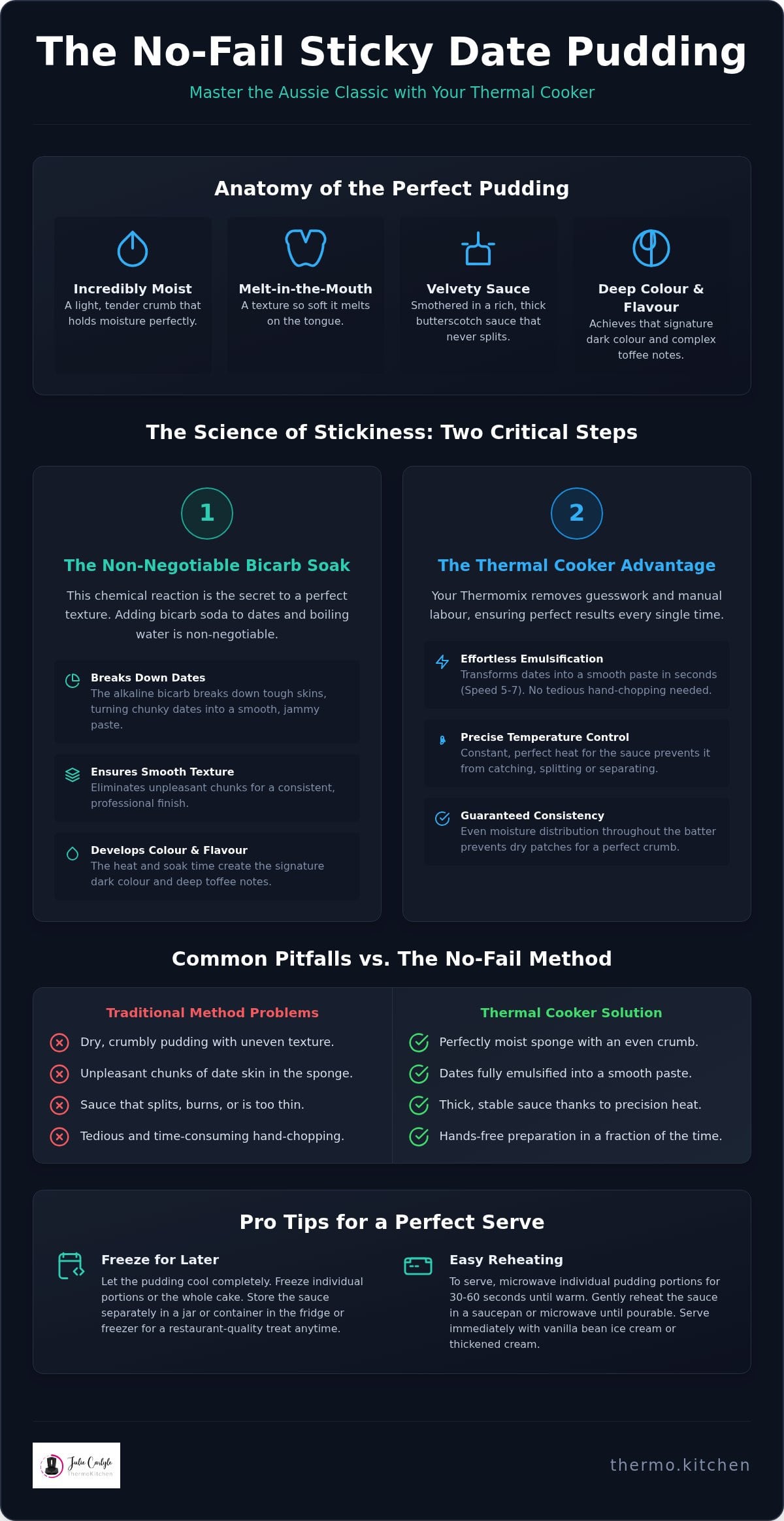
Why is it that some puddings feel like a warm hug while others end up dry, crumbly, and frankly, a bit of a letdown? If you've been searching for a sticky date pudding recipe that actually works, you've likely dealt with the "faff" of hand-chopping dates or the disappointment of a sauce that just won't thicken. It's a common kitchen struggle, but it doesn't have to be your experience any longer.
We can all agree that the perfect pudding should be incredibly moist and smothered in a rich, velvety butterscotch sauce that never separates. You want a reliable result that impresses your guests every time without requiring hours of manual labour. It's about achieving that professional, melt-in-the-mouth texture right in your own kitchen using the tools you already have.
In this guide, I'll show you how to use your Thermomix TM6 or the new TM7 to master this Aussie classic with total confidence. We'll look at why the bicarb-softening soak is non-negotiable and how the precise temperature control of your thermal cooker ensures a thick, decadent sauce. You're about to discover a repeatable, no-fail method for the most delicious dessert you've ever served.
Key Takeaways
- Understand why the bicarbonate of soda soak is non-negotiable for breaking down dates and achieving that signature dark, melt-in-the-mouth texture.
- Discover the flavour profile difference between a salty-sweet butterscotch and a classic caramel sauce to elevate your dessert game.
- Master this sticky date pudding recipe using the TM7's precise temperature control to prevent your sauce from splitting or separating.
- Learn how to emulsify dates into a smooth paste effortlessly, skipping the tedious hand-chopping for a more professional finish.
- Pick up expert tips for freezing and reheating your pudding so you always have a restaurant-quality treat ready for unexpected guests.
The Ultimate Aussie Sticky Date Pudding: A Comfort Food Icon
If you've ever spent a chilly winter evening in a local Australian pub, you've likely seen it sitting proudly at the top of the dessert menu. A classic sticky date pudding is a dark, dense sponge made with finely chopped dates and drenched in a pool of golden butterscotch sauce. It's heavy enough to be satisfying but light enough to melt on the tongue, creating a texture that most other desserts simply can't match. It truly is the king of pub desserts across the country, providing the kind of warmth that only a steamed pudding can offer.
While the rest of the world might know this dish as Sticky toffee pudding, here in Australia, we've firmly claimed it as our own under the "sticky date" banner. The core ingredients remain similar, but our local version often leans into a slightly more robust butterscotch profile rather than a simple toffee. When you're following a sticky date pudding recipe, the goal is always to achieve a moist, light crumb that holds its shape under a heavy pour of sauce without being cloyingly sweet or overly bread-like.
Why This Recipe is a 'No-Fail' Favourite
Success with this dessert usually comes down to precision, which is exactly where your thermal cooker changes the game. Using a Thermomix removes the stressful guesswork of monitoring temperatures or timing the date soak perfectly. By using the machine to emulsify the dates into a smooth paste, you ensure the moisture is distributed evenly throughout the batter. This prevents those common dry patches that plague traditional hand-mixed versions.
We've also carefully balanced the sugar levels in the sponge itself. Many recipes overdo the brown sugar in the cake, which makes the whole dish feel too heavy once you add the sauce. By letting the butterscotch sauce provide the main hit of sweetness, the dates' natural caramel notes can really shine. Using high-quality Aussie staples like fresh thickened cream and active bicarb soda makes a world of difference to the final rise and richness.
The Nostalgia Factor: From Pub Classics to Home Kitchens
There's something deeply comforting about the smell of dates and brown sugar wafting through a house. For many Australian families, this pudding evokes memories of Sunday roasts and special occasions where the "big" dessert was the highlight of the night. It's a dish that feels like home, yet it used to be quite a "faff" to prepare before modern kitchen tech arrived to help with the heavy lifting.
The modern thermal cooker has transformed this once-fiddly recipe into a weekly possibility rather than a once-a-year treat. You can go from raw ingredients to a steaming bowl of comfort in less time than it takes to drive to the shops. Sticky date pudding is the quintessential Australian comfort dessert often served with vanilla bean ice cream.
The Science of Stickiness: Why Precision Matters
Creating the perfect texture isn't just about following steps; it's about understanding the chemistry happening inside your mixing bowl. You might notice that almost every sticky date pudding recipe calls for bicarbonate of soda to be added to the dates and boiling water. This isn't just for a bit of lift. The bicarb is an alkaline agent that actively breaks down the tough cellular structure and skins of the dates. This chemical reaction turns the fruit into a soft, jammy consistency that integrates perfectly with the other ingredients, ensuring you don't end up with unpleasant "chunks" in your finished sponge.
The "soak" period is equally vital for developing that signature dark colour. During this time, the natural sugars in the dates begin to interact with the heat in a process related to the Maillard reaction. When these sugars eventually meet the molasses in your brown sugar during the bake, they create those deep, complex toffee notes we all love. Precision matters here because skipping the soak or using water that isn't quite at boiling point will result in a pale, grainy pudding that lacks the depth of a professional version.
The Secret Power of the Thermomix Blades
One of the biggest advantages of using a thermal cooker is how it handles emulsification. While hand-chopping dates is a tedious faff, your machine can transform them into a smooth date paste at Speed 5 to 7 in mere seconds. This ensures that the date fibres are distributed evenly throughout the batter, leading to a consistent crumb and superior moisture retention. If you're using the TM7, the precise stirring action during the sauce phase is a lifesaver. It keeps the butter, sugar, and cream in constant motion at the perfect temperature, which prevents the sauce from catching on the bottom or splitting into an oily mess.
Choosing Your Dates: Medjool vs. Dried
You might be tempted to splurge on expensive Medjool dates, but for this specific dessert, standard pitted dried dates are often the better choice. Medjools have a very high moisture content that can vary between batches, making it harder to get a repeatable result. Dried dates are more consistent and offer excellent value for money. If your dates have been sitting in the pantry for a while and feel a bit tough, simply increase your soaking time by two minutes to freshen them up before you start the blades. For more clever ways to use pantry staples, you can explore our Free Thermomix Recipes for daily kitchen inspiration.
Butterscotch vs. Caramel Sauce: Which One Wins?
While people often use the terms interchangeably, there's a distinct difference between a true butterscotch and a classic caramel. Caramel is made by heating white granulated sugar until it melts and turns a deep amber colour, resulting in a cleaner, sharper sweetness. Butterscotch, however, relies on the marriage of brown sugar and butter. This combination creates a complex, salty-sweet profile with rich molasses undertones. When you're perfecting your sticky date pudding recipe, butterscotch is the undisputed champion. Its earthy depth perfectly complements the dark, jammy dates in the sponge, creating a harmony that white sugar simply can't achieve.
To take your sauce from good to restaurant-quality, don't forget the "salt factor." A generous pinch of sea salt flakes added right at the end doesn't make the sauce savoury. Instead, it acts as a flavour enhancer that cuts through the richness and prevents the dessert from feeling cloying. It's that tiny detail that makes guests go back for a second scoop every single time.
The Emulsification Secret for a Silky Sauce
One of the most common frustrations for home cooks is a sauce that separates into an unappealing "oil slick." This happens when the fat in the butter doesn't properly bind with the water in the cream. Your thermal cooker solves this through high-speed emulsification. By using the blades to constantly stir while heating, you're mechanically forcing those molecules together into a silky, stable liquid. The TM7 is particularly brilliant here because its precise 100°C setting maintains a perfect simmer without ever reaching a rolling boil that might cause the dairy to split. If you do notice a bit of separation, a quick 10-second blast at Speed 4 will usually bring it right back together beautifully.
Serving Styles: The 'Pub Drench' vs. The 'Elegant Drizzle'
How you present this dish often depends on the occasion. For a casual family dinner or a big gathering, nothing beats the "pub drench." Bake the pudding in a large rectangular slice tin, poke holes across the surface while it's hot, and pour over half the sauce. Let it soak in for ten minutes before serving big, messy scoops with extra sauce on the side. It's rustic, generous, and exactly what you'd expect from a top-tier Aussie bistro. This method ensures every single bite is saturated with that golden butterscotch goodness.
If you're hosting a more formal dinner party, individual ramekins offer a more refined finish. You'll need to reduce your baking time by about 10 to 15 minutes, but the result is a perfectly portioned, elegant dessert. Regardless of the shape, the accompaniments are non-negotiable. A dollop of thick double cream or a lake of warm vanilla custard is the classic choice. Some even prefer a scoop of high-quality vanilla bean ice cream to provide a cold contrast to the steaming hot pudding.
How to Make No-Fail Sticky Date Pudding in Your Thermomix
Ready to get started? This sticky date pudding recipe is designed to be efficient, moving from the mixing bowl to the oven in under fifteen minutes. The process begins with the "Bicarb Soak." Simply place your pitted dates and boiling water into the bowl, add your bicarbonate of soda, and let it sit for ten minutes. This softens the dates and prepares them for the next stage. Once the time is up, you'll move to the emulsification step. Blitz the mixture on Speed 7 for several seconds until it becomes a smooth, dark paste. This ensures the moisture is locked into every millimetre of the batter.
Next, add your butter, brown sugar, and self-raising flour. A quick twenty-second mix on Speed 4 is all it takes to bring the batter together. Transfer the mixture into your prepared tin and bake at 180°C in a fan-forced oven. The final, most crucial step is "The Drench." As soon as the pudding comes out of the oven, use a skewer to poke holes across the surface and pour over about a third of your warm butterscotch sauce. This "dual-soak" method, combined with the initial date soak, creates that legendary moistness that sets this recipe apart from standard bakes.
Essential Equipment for the Best Result
For the perfect Aussie pub-style finish, a 20cm square tin is the gold standard. It provides the ideal depth for the sponge to rise while ensuring the centre cooks through evenly. Always line your tin with baking paper, leaving a bit of an overhang on the sides. This allows you to lift the whole pudding out easily without it breaking. Don't forget to use your Thermomix spatula to scrape down the sides of the bowl. Date paste is incredibly sticky, and you want every bit of that flavour in your tin rather than left behind on the blades.
Troubleshooting Your Pudding
If you find your pudding is sinking in the middle, the most likely culprit is the age of your bicarbonate of soda. Bicarb loses its potency over time; if it's been sitting in the pantry for more than six months, it might not provide the lift you need. Always use the skewer test to check for doneness. Insert it into the centre; if it comes out clean or with just a few moist crumbs, it's ready. If it's still "gooey" batter, give it another five minutes. While this recipe is optimised for the TM6 and TM7, it works beautifully in the TM31 and TM5 too. Just be mindful of bowl capacities if you decide to double the batch for a large party.
Mastering these steps is the first move toward becoming a dessert legend in your own home. For more detailed guides and inspiration, check out our Free Thermomix Recipes.
Beyond the Pudding: Mastering Family Desserts with ThermoKitchen
If you find yourself with leftovers, consider it a win. A sticky date pudding recipe is one of those rare gems that actually tastes better the next day. As the pudding sits in the fridge, the sponge continues to draw in the moisture from the butterscotch sauce, deepening the flavour and creating an even fudgier texture. Simply store any remaining portions in an airtight container in the refrigerator for up to five days. It is the perfect "make-ahead" dessert for busy weekends or dinner parties where you want to minimise your time in the kitchen.
Freezing is another fantastic option for staying prepared. You can freeze the entire pudding or, better yet, individual slices already drenched in sauce. This gives you a "ready-to-go" dessert for those nights when unexpected guests drop by or you just need a bit of a treat. When you're ready to serve, use the "reheat hack" to bring back that just-baked warmth. A quick 30 to 60 seconds in the microwave on medium power will relax the crumb and turn the sauce back into a silky liquid. It's an effortless way to enjoy restaurant-quality results long after the initial bake.
Level Up with ThermoKitchen Cookbooks
Once you've mastered this classic, you might find yourself eager to explore more sophisticated bakes. Our specific dessert and baking collections in the ThermoKitchen shop are designed to help you do exactly that. Every recipe we develop is rigorously tested for Australian kitchens, ensuring that the ingredients you find at your local supermarket will work perfectly every time. There is a practical joy in having a hard-copy cookbook on your kitchen bench. It allows you to follow the steps clearly without worrying about getting flour on your phone screen or losing your place in a digital tab.
Join the Community of Thermo Cooks
Cooking is always more fun when it's shared. We love seeing the results of your hard work, so don't be shy about sharing your pudding photos on social media and tagging us. If you are curious about how the latest technology can further simplify your meal prep, you can even book a consultation to see the Thermomix TM7 in action. This model offers incredible precision for delicate tasks like caramelisation and tempering, making it a dream for dessert lovers. Whether you're a seasoned pro or just starting your journey, remember that the right tools and a bit of guidance make all the difference. You've got this, happy cooking!
Ready to Serve the Ultimate Aussie Classic?
Mastering this sticky date pudding recipe is about more than just mixing ingredients; it's about using your thermal cooker's precision to achieve that perfect, melt-in-the-mouth texture. By understanding the science of the bicarb soak and the power of high-speed emulsification, you've moved beyond guesswork. You can now serve a dessert that rivals any local bistro, complete with a silky butterscotch sauce that never splits.
At ThermoKitchen, we believe every home cook deserves to feel confident. Our recipes are developed by Julie Carlyle, an independent Thermomix consultant with over 10 years of thermal cooking expertise. Every dish is rigorously tested for Australian family kitchens to ensure you get a reliable result every single time. Whether you're using the TM6 or the latest TM7, you have the tools to create something truly special for your loved ones.
Discover the full range of ThermoKitchen Cookbooks and the TM7 here!
You've got all the tips and tricks you need to impress your family and friends at your next dinner party. It's time to get those dates soaking and enjoy the most decadent pudding you've ever made. Happy cooking!
Frequently Asked Questions
Can I make sticky date pudding without a Thermomix?
Yes, you can certainly make this dessert without a thermal cooker. You will need to finely chop your dates by hand and use a traditional saucepan for the sauce, which requires constant whisking to prevent the sugar from catching. However, the Thermomix simplifies the process by emulsifying the fruit into a smooth paste and using precise heat for the sauce. It removes the manual labour and ensures a consistent result every time.
What is the best type of date to use for this recipe?
Pitted dried dates are the best choice for a consistent result in your kitchen. While Medjool dates are incredibly sweet, their moisture levels vary significantly between batches, which can throw off the delicate balance of your sponge. Standard dried dates from the baking aisle are more reliable and much more cost-effective. If they feel firm, simply extend your soaking time in the boiling water and bicarb mix to ensure they soften completely.
How do I stop my butterscotch sauce from separating?
The secret to a stable sauce is maintaining a steady, low heat and constant agitation. Using the TM7's precise settings is the most effective way to prevent the fat in the butter from pulling away from the cream. If you are cooking on a stovetop, keep the heat low and whisk continuously. If separation does occur, a quick ten-second high-speed blitz in your machine will usually re-emulsify the mixture into a silky, decadent liquid.
Can I freeze sticky date pudding with the sauce already on it?
Absolutely, and it is actually recommended for the best flavour profile. Freezing the pudding with a layer of sauce allows the sponge to remain incredibly moist during the thawing process. Wrap individual portions tightly in plastic wrap or store them in airtight containers for up to three months. When you are ready for a treat, thaw them in the fridge overnight and reheat in the microwave for a few seconds to restore that just-baked warmth.
What is the difference between sticky date pudding and sticky toffee pudding?
The main difference lies in the regional naming and the specific sugar preferences used in the sauce. In Australia, we call it sticky date pudding and typically favour a rich butterscotch sauce made with brown sugar and butter. In the UK, it is often called sticky toffee pudding and can sometimes feature a different toffee base. Both feature a date-based sponge, but the Aussie version is the quintessential pub classic we all know and love.
How long does sticky date pudding last in the fridge?
Your pudding will stay fresh and delicious in the refrigerator for up to five days. Ensure it is kept in an airtight container to prevent it from absorbing other fridge odours. Because this sticky date pudding recipe is so moist, it holds up better than most cakes. In fact, many families find the texture becomes even fudgier and more decadent after a day or two as the butterscotch sauce continues to soak into the crumb.
Can I make this recipe gluten-free?
Yes, you can easily adapt this dish by swapping the self-raising flour for a high-quality gluten-free self-raising blend. Look for a brand that includes a binder like xanthan gum to help maintain the structure of the sponge. Since dates and butterscotch ingredients are naturally gluten-free, you won't need to change anything else. Just be sure to check your labels on the bicarb soda and cream to ensure they are certified safe for your specific needs.
Why did my pudding come out dry?
Dryness is usually caused by over-baking or skipping the essential bicarb soak. If the dates aren't properly softened and emulsified, they can't release their natural moisture into the sponge. Always use a skewer to check the centre at the minimum baking time. If it comes out clean, take it out immediately! Following this sticky date pudding recipe correctly means you must also pour half your warm sauce over the hot pudding straight from the oven.


Leave a Reply